
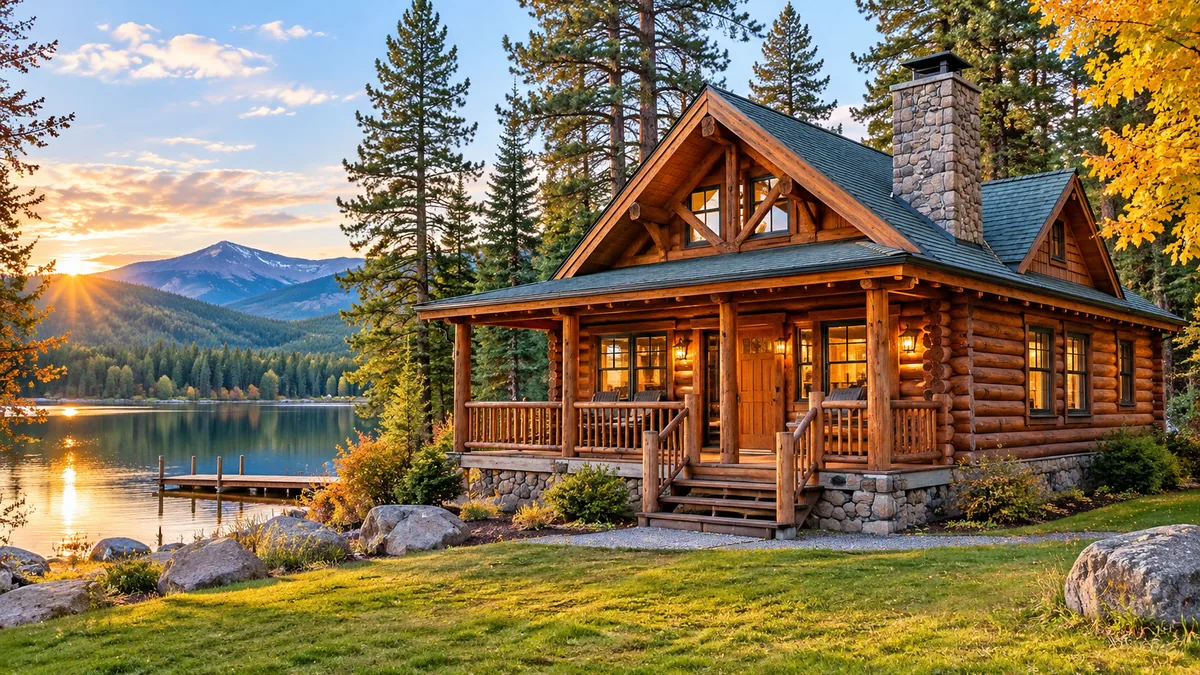
Looking for cabins for sale in the USA? Cabin listings range from compact woodland retreats and traditional log homes to lakefront cottages, mountain cabins, A-frame houses and remote off-grid properties. The right choice depends on more than the asking price: location, legal access, year-round road conditions, water, septic, heating, insurance and the rules governing short-term or seasonal use can change the real cost of ownership.
This guide explains the main cabin types, where to search for listings, how to compare properties and what to verify before making an offer. It is a buyer’s research guide, not a live MLS feed or a claim that any particular cabin is currently available.
What counts as a cabin?
There is no single nationwide definition used by every listing site. A property described as a cabin may be a small year-round house, a seasonal recreational dwelling, a log-built home, a cottage or a simple structure on rural land. Some listings use “cabin” as a marketing description even when the building is a conventional house. Check the construction, permitted use, foundation, utilities and occupancy status rather than relying on the label alone.
Types of cabins for sale in the USA
Log cabins
Traditional log cabins use exposed logs as a major structural or exterior feature. Buyers should inspect log condition, moisture intrusion, chinking or sealant, roof overhangs, insect damage, settlement and maintenance history. Ask whether the logs are structural or decorative siding.
A-frame cabins
A-frame cabins have steep rooflines and often use open-plan interiors or lofts. Review usable floor area, stair and loft safety, roof condition, insulation, ventilation and how the layout works for the intended number of occupants.
Lakefront and waterfront cabins
Lake cabins may offer direct water access, a dock or shoreline views, but ownership rights vary. Confirm the actual property boundary, recorded easements, dock permits, shoreline setbacks, flood exposure, seasonal water levels and whether the lake is private or publicly managed. A waterfront view does not automatically mean private beach or dock rights.
Mountain and forest cabins
Mountain and wooded properties can involve steep driveways, snow removal, wildfire exposure, limited cell coverage and longer emergency response times. Ask about winter access, road maintenance agreements, tree management, defensible space and the availability and cost of homeowners insurance.
Off-grid cabins
Off-grid may mean solar power, batteries, a generator, propane, a well, a cistern or a composting/approved wastewater system. Request equipment ages, maintenance records, operating instructions, warranties and recent performance data. Verify that each system is permitted and acceptable to local authorities and, if financing is needed, to the lender and appraiser.
Small, hunting and recreational cabins
Small cabins and hunting camps may be seasonal or have limited plumbing, insulation and heating. Confirm whether residential occupancy is allowed, whether the building has a certificate of occupancy where required, and whether the property can legally be used for the purpose you intend.
Where to find cabins for sale
- Zillow: search residential listings and try terms such as cabin, log cabin, A-frame, lakefront, cottage, woods and getaway. Listing descriptions and filters vary by market.
- LandSearch cabin listings: a dedicated starting point for cabins and cabin properties with land across the United States.
- Realtor.com: compare broker-listed homes and use keywords alongside location and property filters.
- Land.com: useful for rural property, recreational land and listings where acreage is part of the purchase.
- Local real-estate brokerages and county property records: use them to confirm listing details, parcel boundaries, tax information and local restrictions.
Search with one descriptive phrase at a time, then widen the search. For example, compare “log cabin for sale,” “A-frame cabin,” “lake cabin,” “mountain cabin,” “cabin with acreage” and “off-grid cabin.” A listing portal may index the word “cabin” inside a description even when the home-type filter is set to houses, so review the actual building and property details.
Cabin locations buyers often compare
There is no universally best state for cabin ownership. Buyers commonly compare mountain, lake, forest and rural recreation areas across states such as Tennessee, North Carolina, Georgia, Virginia, West Virginia, Colorado, Montana, Idaho, Maine, Michigan, Wisconsin, Minnesota, Arkansas and the Ozarks. These are broad search regions, not a ranking or a guarantee of affordable inventory.
Compare the exact county and community rather than choosing a state based only on a low advertised price. Property taxes, insurance availability, wildfire or flood exposure, snow access, local short-term rental rules and distance to services can vary significantly within one state.
How much do cabins cost?
Cabin prices vary widely by region, land size, building condition, waterfront access, road access, utilities, permitted occupancy and whether the property is a primary residence or a seasonal retreat. A small cabin without modern utilities may have a lower asking price but require substantial work. A finished lakefront or mountain home can be priced more like a conventional second home.
Do not compare asking prices without comparing what is included. Check whether the sale includes the land, furnishings, dock, outbuildings, well, septic system, solar equipment, road association rights and mineral or timber rights where relevant. Add inspection, survey, closing costs, repairs, utility work, insurance, taxes and ongoing maintenance to your budget.
Can you get a mortgage for a cabin?
Financing depends on the property and how it will be used. A conventional lender may treat a qualifying, year-round cabin as a second home or as an investment property. Seasonal access, unusual construction, a non-permanent foundation, limited utilities, shared access, remote location or an unpermitted structure can make underwriting more difficult. Some properties may require a portfolio lender, land loan or cash purchase.
Before making an offer, speak with a lender who has experience with rural and recreational properties. Ask what standards apply to foundation, year-round access, water, wastewater, heating, appraisal and insurance. Do not assume that a cabin qualifies for a standard residential mortgage simply because it appears on a residential listing site.
Cabin buyer due-diligence checklist
- Confirm title and boundaries. Order a title search and review easements, deed restrictions, liens, covenants, shared roads and any association obligations. Obtain a current survey where appropriate.
- Verify legal access. Determine whether the cabin fronts a public road or relies on a private road or recorded easement. Confirm who maintains the road and whether access is reliable in winter or during storms.
- Check zoning and permitted use. Ask the county or municipality whether residential, seasonal, recreational, hunting or short-term rental use is permitted. Check setbacks, building rules, occupancy limits and any HOA or deed restrictions.
- Inspect water and wastewater. Identify whether the property uses public water, a private well, spring or cistern. Obtain well records and water-quality testing. For septic, review permits, age, maintenance, inspection results and whether the system is approved for the cabin’s bedroom count and intended use.
- Inspect structure and systems. Hire qualified inspectors familiar with the construction type. Review roof, foundation, logs or siding, chimney, heating, electrical, plumbing, insulation, moisture, pests and any additions.
- Review hazards and insurance. Check flood maps, wildfire risk, slope stability, erosion, radon where relevant and local weather exposure. Get an insurance quote before the end of the inspection period; some remote or seasonal properties may be difficult or expensive to insure.
- Test utilities and communications. Confirm electricity, propane, internet, cell service, trash collection and emergency access. For solar or generator systems, request maintenance logs and test them under load.
- Estimate year-round ownership costs. Include property tax, insurance, road dues, snow removal, tree work, septic pumping, well maintenance, heating fuel, pest control and seasonal opening or winterization.
- Review rental rules if relevant. Confirm local short-term rental licensing, zoning, taxes, occupancy rules, fire-safety requirements and any community restrictions before assuming rental income is possible.
- Use a suitable inspection and contract contingency. Allow time for survey, title, septic, well, structural, insurance and financing checks. Consult a local real-estate attorney or qualified professional for state-specific legal questions.
Special checks for lakefront cabins
Ask whether the shoreline is privately owned, subject to public access, or governed by a lake association. Review recorded dock or boat-slip rights, shoreline permits, flood history, erosion, septic setbacks and any seasonal restrictions on watercraft. The University of Minnesota Extension’s shoreland property checklist recommends checking zoning, permits, utilities, wells, septic feasibility and the site itself before purchase.
Special checks for off-grid cabins
Request documentation for solar panels, batteries, inverters, generators, propane tanks, wells, cisterns and wastewater systems. Confirm ownership of the equipment, serviceability, replacement costs and whether the installation was permitted. For septic questions, consult the local health department and the EPA septic system guidance. Rules differ by state and county; a seller’s statement that a system is “grandfathered” should be independently verified.
Building or placing a cabin on land
Buying vacant land with the intention of adding a cabin is not the same as buying an existing permitted home. Before closing, check zoning, minimum dwelling size, setbacks, driveway access, building permits, floodplain and wetland constraints, utility connections, well approval and septic feasibility. The Nolo vacant-land checklist explains why zoning, water, sewer, access and title issues need to be investigated early. FEMA’s building permit checklist also recommends discussing local code and permit requirements with the relevant officials.
Related rural property searches
- Homes with Acreage for Sale in USA — for buyers prioritizing a house with additional land.
- Farms for Sale in USA — for working farms, ranches and agricultural property.
- Small Farms for Sale in USA — for hobby farms and smaller acreage.
- Farm Houses for Sale in USA — for farmhouse-style homes with land.
- Manufactured Homes for Sale in USA — for factory-built housing options.
- Foreclosure Homes for Sale in USA — for buyers researching bank-owned and auction properties.
Frequently asked questions about cabins for sale
Where can I find cabins for sale in the USA?
Start with major home-search portals, dedicated rural-property sites such as LandSearch and local brokerages. Search by state, county and cabin type, then confirm details with the listing agent and public records.
Are there cheap cabins for sale in the USA?
Lower-priced cabins may be seasonal, remote, in need of repairs or sold without modern utilities. Check access, title, water, septic, permitted use, structural condition and insurance before comparing price alone.
Can I buy a cabin with land?
Yes. Some listings include acreage, while others include only a small parcel or shared recreational rights. Verify the legal parcel, survey, access easements and exactly which land transfers at closing.
Are log cabins cheaper than regular houses?
Not necessarily. Price depends on location, size, condition, land and amenities. Log homes can also require specialized maintenance for moisture, joints, pests and weather exposure.
Can I finance an off-grid cabin?
Possibly, but lender requirements vary. A cabin with nonstandard construction, seasonal access or limited utilities may not qualify for a conventional mortgage. Ask lenders to review the specific property before making an offer.
Can I use a cabin as a short-term rental?
Only if local zoning, licensing, tax, safety and community rules allow it. Confirm requirements with the county or city before including rental income in your purchase calculations.
What should I inspect before buying a lake cabin?
Inspect the structure, roof, foundation, well and septic system, shoreline condition, flood exposure, dock rights, permits, easements and road access. Confirm whether the shoreline and dock are part of the property.
What is the difference between a cabin and a cottage?
The terms overlap and are not defined uniformly across listing portals. “Cabin” often suggests a rural or recreational setting, while “cottage” may describe a small house; verify construction, use and legal status rather than the marketing term.
Can I build a cabin on any rural land?
No. Zoning, minimum lot size, setbacks, access, building codes, environmental restrictions, water and septic approval can prevent or limit construction. Check with local authorities before buying land.
Is an off-grid cabin suitable for year-round living?
Some are, but others are seasonal. Confirm insulation, heating, water supply, wastewater, road access, power capacity, internet and emergency access for the climate and intended occupancy.
Final thoughts
The best cabin purchase is the one that fits your intended use and remains practical after closing. Compare the building, land, access, utilities, local rules, financing and ongoing costs together. Use listing portals to discover properties, but verify every important claim with the county, qualified inspectors, the lender, insurer and a local real-estate professional before committing.
Editorial note: This guide provides general U.S. property-buying information, not legal, tax, engineering or financial advice. Local rules and individual property conditions control. Listing availability and asking prices change frequently; verify current details directly with the listing source.