
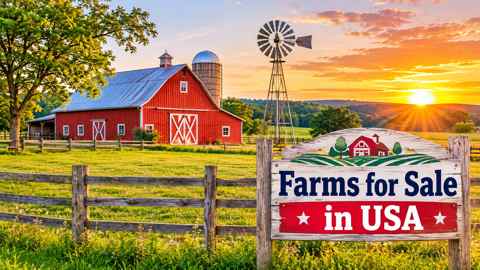
Searching for farms for sale in the USA means comparing much more than acreage and asking price. A farm may include productive cropland, pasture, timber, a farmhouse, barns, irrigation systems, ponds or livestock facilities. The right property depends on how you plan to use it: crop production, livestock, a small family farm, an agricultural investment or a rural home with extra land.
This guide explains where to search for farms for sale, how to compare small farms and larger agricultural properties, which costs to investigate, and what to verify before making an offer. Listing availability and prices change frequently, so always confirm the current status directly with the listing agent or seller.
Where to Find Farms for Sale in the USA
Start with specialist rural-property marketplaces, then compare promising properties with local broker and county records. No single website includes every farm currently on the market.
- Land.com Farms – browse farm and rural-property listings by location, acreage and price.
- LandWatch Farms and Ranches – search agricultural, ranch, recreational and rural properties across the country.
- Land And Farm – another specialist marketplace for farms, ranches and land.
- LandSearch – compare land listings and property details by state and county.
Use these platforms to discover properties, not as proof that a listing is still available. Ask the listing contact to confirm the asking price, status, parcel boundaries, included improvements and whether the advertised acreage is approximate or surveyed.
Types of Farms for Sale
Small farms and hobby farms
Small farms for sale may suit buyers who want a garden, orchard, a few animals or a part-time agricultural project. For a focused comparison of small farms for sale, hobby farms and mini farms, see our dedicated small-farm guide. Check whether the property has usable acreage, road access, dependable water, suitable soil and local permission for the activities you have planned. A small parcel with a house is not automatically approved for commercial farming or livestock.
For a focused guide to farmland for sale and agricultural land, including cropland, pasture, soil and water checks, see our dedicated farmland guide.
Crop farms and row-crop farmland
Crop farms are evaluated by soil characteristics, field layout, drainage, irrigation, access to grain markets and the crops that can realistically grow in the area. Ask for available yield history and input-cost records, but have those documents reviewed independently. Past production does not guarantee future income.
Cattle, dairy and livestock farms
Livestock properties may include pasture, fencing, barns, handling facilities, feed storage and water systems. Confirm the condition and capacity of each improvement. For dairy or other regulated operations, investigate permits, waste-management requirements, animal-health records and any required facility upgrades.
Orchards, vineyards and specialty farms
Specialty farms can depend on crop age, irrigation, frost exposure, labor availability, equipment and access to processors or buyers. Verify which equipment, crops, contracts and business assets are actually included in the sale.
Popular States to Search for Farms
Search by county as well as state. Agricultural conditions, land values, water availability, taxes and local rules can vary substantially within the same state.
- Texas: buyers may find cattle properties, ranches, pastureland and mixed-use rural acreage. Water availability and mineral rights deserve careful review.
- Kansas and Iowa: compare crop-oriented properties, soil productivity, drainage, field access and local grain-market logistics.
- Missouri and Tennessee: investigate mixed pasture, wooded acreage, livestock facilities and rural homes, while checking terrain and usable field area.
- Wisconsin: buyers looking at dairy or livestock properties should examine barns, milking equipment, water systems and applicable environmental requirements.
- Florida and California: specialty crops and growing conditions may attract buyers, but water rights, irrigation costs, climate exposure and local regulations are especially important.
These are broad search starting points, not a ranking of the cheapest or most profitable states. Compare actual parcels and local market evidence before choosing an area.
How to Compare Farm Prices and Acreage
Do not compare two farms using the total acreage and asking price alone. Calculate the asking price per acre, then separate productive cropland, pasture, woodland, wetlands, steep or otherwise restricted areas. A property advertised as 100 acres may not contain 100 usable agricultural acres.
Review the farmhouse and outbuildings separately. A large home, renovated barn, fencing, irrigation equipment or grain storage can affect value, but only if the structures are safe, permitted and useful for your intended operation. Request an itemized list of fixtures, machinery and personal property included in the transaction.
Also estimate annual property taxes, insurance, utilities, repairs, fuel, labor, fertilizer, seed, feed, equipment maintenance and financing costs. A low purchase price can become expensive if the farm needs a new well, drainage work, roof repairs or major equipment.
Farm Buying Checklist: What to Verify Before You Make an Offer
- Ownership and title: use a qualified title company or real-estate attorney to review ownership, liens, easements, access rights and recorded restrictions.
- Survey and boundaries: obtain a current survey where needed. Compare the legal description with fences, roads, waterways and the acreage advertised.
- Soil and land capability: review the USDA NRCS Web Soil Survey. Soil maps are useful screening information, not a substitute for field testing or professional agronomic advice.
- Water supply: inspect wells, pumps, ponds, streams, irrigation systems and water-quality records. Confirm legal water-use rights and any withdrawal limits with the relevant state or local authority.
- Zoning and permitted use: contact the county planning or zoning office to confirm whether your intended crops, livestock, farm buildings, residence, business or subdivision plans are allowed.
- Flooding and drainage: check flood exposure, wetlands, drainage easements and past water damage. Ask local officials and qualified specialists about site-specific concerns.
- Buildings and equipment: arrange inspections of the farmhouse, barns, roofs, electrical systems, septic system, wells, fencing and machinery you intend to buy.
- Financial and operating records: request available tax, utility, production, lease and maintenance records. Have an accountant or agricultural adviser review income and expenses.
- Access and utilities: confirm year-round legal road access, electricity, internet availability, septic capacity and any shared-road maintenance obligations.
- Professional review: use local agricultural real-estate, legal, survey, environmental and lending professionals before waiving contingencies or closing.
Financing a Farm Purchase
Farm financing can differ from a standard residential mortgage. Lenders may consider the property type, down payment, borrower experience, farm business plan, income, collateral and intended use. Some buyers may qualify for agricultural lending programs, while others may need a commercial, land or conventional loan.
Review current program rules directly with the USDA Farm Service Agency and speak with lenders who regularly finance farms. Eligibility, loan limits, interest rates and application requirements can change. Do not assume that a buyer qualifies for a government-backed program until the agency or lender confirms it.
Are Cheap Farms for Sale a Good Deal?
Cheap farms for sale can be attractive, but a low asking price may reflect limited road access, poor soil, steep terrain, flood risk, no usable water, title problems, environmental restrictions or buildings in need of repair. Check the reason for the price before treating a listing as a bargain.
Compare the property with recent local sales of similar land and improvements. If the farm is being sold at auction, read the auction terms, buyer premiums, deposit rules, inspection access and closing deadline before bidding. Never rely only on listing photos or an online acreage estimate.
Frequently Asked Questions About Farms for Sale
1. Where can I find farms for sale in the USA?
Start with specialist marketplaces such as Land.com, LandWatch, Land And Farm and LandSearch. Then verify each property with the listing broker, seller and relevant county offices.
2. How do I find small farms for sale?
Search by state or county and set an acreage range that matches your plans. Use terms such as small farm, hobby farm, mini farm or acreage with farmhouse, and check how much of the land is actually usable.
3. What should I check before buying farmland?
Review title, survey, soil, water rights, zoning, access, drainage, flood exposure, buildings, taxes and operating costs. Use qualified local professionals for legal, engineering and environmental questions.
4. Are farms for sale listed on Zillow?
Some rural homes and land may appear on broad real-estate portals, but agricultural inventory can be incomplete or categorized differently. Compare specialist farm marketplaces and local brokers as well.
5. Can I get a loan to buy a farm?
Possibly. Financing depends on the property, intended use, borrower qualifications and lender rules. Contact agricultural lenders and the USDA Farm Service Agency to check current options and eligibility.
6. Is buying a farm a good investment?
It depends on purchase price, location, soil, water, operating costs, market conditions and your management plan. Land values and farm income are not guaranteed, so assess risks and cash flow before buying.
Final Thoughts
The best farm for sale is not necessarily the largest or cheapest property. It is the one whose land, water, buildings, legal status and operating costs fit your goals. Compare several local listings, inspect the property in person, verify documents independently and get professional advice before signing a purchase agreement.
For more property research, you can also read our guides to houses for sale under $50K, affordable houses in New York and finding a property that fits your needs.
For buyers who want a rural residence with land and outbuildings, see our guide to farm houses for sale in the USA, including farmhouse inspections, acreage and buying considerations.
For buyers considering a direct owner sale, see our guide to farms for sale by owner in the USA, including FSBO checks and seller-financing terms.